Best Travel Bag for Insulin: Top Insulin Cooler Cases for Safe, on-the-Go Storage
Finding a reliable travel bag for insulin is essential for anyone who relies on temperature-sensitive diabetes supplies while on the move. The following selects highlight cases designed to keep insulin pens, vials, and other diabetic supplies cool, organized, and compliant with travel guidelines. Each option features durable construction, portable designs, and practical cooling elements to support short trips, flights, and daily commutes.
| Product | Key Benefit | Ideal For |
|---|---|---|
| Gosemai Insulin Cooler Travel Case | Real-time Fahrenheit display, two TSA-approved ice packs | Travelers needing easy temp monitoring |
| AUVON Insulin Cooler Travel Case (2 x 90g) | Compact; 4-8 hour cooling with reliable ice packs | Daily commutes and short trips |
| Cruxer Insulin Vial Cooler | Insulated shell with dedicated insulin ice brick | Travelers prioritizing long insulation time |
| YOUSHARES Insulin Cooler Travel Case | Real-time temp display; compact with ample space | Frequent travelers seeking monitoring |
| BLK8IGHT Insulin Pen Cooler | Waterproof design; TSA-ready ice packs | Minimalist travel with reliable protection |
Gosemai Insulin Cooler Travel Case

The Gosemai insulin cooler is designed for travelers who want clear temperature visibility. It features a Fahrenheit temperature display (requires battery) to monitor the internal environment in real time. The exterior uses EVA material with an aviation-grade insulation lining inside, providing good water resistance while preserving temperature. Two large ice packs, TSA-approved, ensure cooling during transit. After freezing, the packs typically maintain temperature around 35.6-46.4 ℉ for 3-6 hours when outdoor temperatures remain below 86 ℉. The design aims for practical reliability during short-to-mid-length journeys.
Practical notes: no electricity is needed during operation, and the case emphasizes secure storage of diabetic supplies. The combination of outer and inner materials supports portability and protection against external impacts, making it suitable for day trips, airport layovers, or bus rides where temperature control matters.
AUVON Insulin Cooler Travel Case (2 x 90g)

The AUVON travel case pairs compact size with effective cooling performance. It includes two upgraded ice packs at 90g each, providing 4-8 hours of cooling after a 3-hour freeze. Real-world results vary with ambient temperature, but this setup is designed for stress-free short trips. Its dimensions (about 7.7 x 3.15 x 1.38 inches) enable one-handed handling and easy fit in a purse or small backpack. The exterior is made of Oxford fabric with a thick pearl cotton and aluminum interior, promoting durability and insulation for insulin and other diabetic supplies.
AUVON Insulin Cooler Travel Case (Expandable)
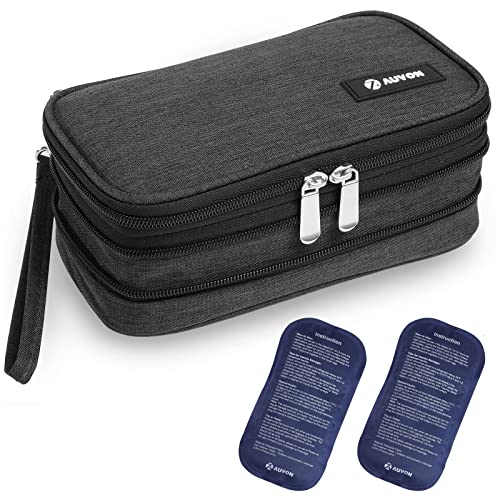
This expandable AUVON model increases capacity by about 40% via a robust expansion zipper. It uses a triple-layer compartment to organize insulin pens, syringes, swabs, and other diabetic supplies efficiently. The cooler includes two 180g ice packs, supporting an 8-10 hour cooling window after 12 hours of freezing in ideal conditions. The combination of Oxford fabric exterior, thickened pearl cotton, and an aluminum interior delivers solid insulation for keeping items cool while traveling, especially on longer day trips or weekend getaways.
Cruxer Insulin Vial Cooler Travel Case

The Cruxer model emphasizes a dedicated ice brick for insulin, crafted from food-grade HDPE. The shell provides cushioning to reduce movement of vials during travel, complementing long insulation times. The case is designed to hold insulin vials securely and protect them throughout transit. At 7.9 x 3.6 x 2.2 inches, it remains highly portable, with a carrying handle for on-the-go convenience. TSA approval indicates compatibility with airline screening when ice packs remain cold and properly frozen.
BLK8IGHT Insulin Pen Cooler

BLK8IGHT offers a compact, waterproof insulin travel case designed for insulin pens and other delicate supplies. It features two reusable TSA-approved ice packs and a sturdy zipper for secure closure. The small form factor helps keep items organized and accessible during travel. The external material and inner lining work together to maintain temperature, with insulation designed to support refreshing cold storage for several hours in transit. The design suits travelers who want a discrete, reliable bag for everyday use or short-hour flights.
Buying Guide
- Cooling duration: Note how long the case can maintain a safe temperature after freezing the ice packs. Longer cooling times are beneficial for longer trips or flights with layovers.
- Capacity and organization: Consider how many insulin pens, vials, syringes, blood glucose monitors, and other supplies you carry. Look for triple-layer compartments or adjustable dividers for neat organization.
- Temperature monitoring: Real-time temperature displays provide peace of mind, but require batteries or power. Decide if monitoring is essential for you or if passive insulation suffices.
- Durability and portability: Materials such as EVA, Oxford fabric, aluminum lining, and reinforced zippers support durability. Check pouch dimensions to ensure it fits in carry-on bags or purses.
- Ice packs: TSA-approved packs simplify air travel. Consider pack size and weight; heavier packs may impact comfort but may provide longer cooling.
- Air travel rules: Most models comply with TSA guidelines for frozen or refrigerated items. Verify ice pack weight limits and packing requirements before departure.
- Waterproofing and insulation: Waterproof outer layers help protect contents from moisture, while insulation thickness (pearl cotton, aluminum liner) supports stable temperatures during transit.
- Cleaning and maintenance: Reusable ice packs and wipe-clean interiors save time and reduce odors. Look for removable liners for easier sanitation.
- Value and warranty: Compare features across models to assess whether a slightly higher price yields meaningful benefits in safety and convenience. Check warranty terms if available.
These options represent a range from compact, easily portable bags to more feature-rich cases with expandable storage and temperature displays. When selecting a travel bag for insulin, prioritize your typical travel duration, the number of supplies you transport, and how closely you need to monitor temperature during movement.