Best Backpack for Special Needs: Safe, Reliable Harness Options for Independence
Choosing the right safety harness or walking leash can help children with autism, ADHD, and other special needs explore the world with confidence while providing caregivers peace of mind. This guide spotlights five top options designed for growth, comfort, and easy supervision in busy settings. Each product features adjustable sizing, durable construction, and kid-friendly design, with lightweight materials and practical add-ons like grab handles, tethers, and small pouches. Read on to compare options and learn what matters most when picking a safety solution for active kids.
Summary of selected products:
- JXM 2025 New Safety Harness for Autism and Special Needs Child (3-6 yrs) — Anti-elopement vest with light reflector and grab handle.
- HOOMTREE Safety Harness Leash for Kids with Autism (Ages 6-12) — Adjustable harness with grab handle and tether.
- Walking Harness for Older Children with Quick Grab Handle — Pouch-equipped design for on-the-go needs.
- HOOMTREE Safety Harness for Special Needs Child Aged 6-12 — Fully adjustable with back-cross design for stability.
- Anti Lost Wrist Strap — Escape-proof wrist leash with locking buckle for crowded environments.
JXM 2025 New Safety Harness For Autism And Special Needs Child

The JXM safety harness combines a built-in elopement restraint with a lightweight vest design. It features reinforced stitching on the handle and upgraded hardware for durability, addressing common wear concerns. The Grow-With-Me sizing accommodates a growing child, with shoulder straps extending from 15.74″ to 28.3″ and a back tether that adjusts from 3.2 to 5.2 feet. A detachable autism pin badge adds visibility and awareness, while the vest pattern enhances outdoor comfort for children during outings.
HOOMTREE Safety Harness Leash For Kids With Autism Ages 6-12

This HOOMTREE model targets older children with autism or ADHD, offering a more streamlined single-side adjustment and lighter straps for comfort. It uses a clear autism awareness puzzle motif to aid recognition and acceptance. The harness provides adjustable shoulder, chest, and waist straps with slide buckles, supporting a comfortable fit as kids grow (recommended for ages 3 to 12; waist 22.8″ to 35.4″). The 2025 upgrade emphasizes easier one-sided operation, reducing handling fatigue for guardians during outings.
Walking Harness For Older Children With Quick Grab Handle

This pinklilycare walking harness is designed for autonomy and safety in busy locations. It features an autism awareness puzzle pattern on the front for easy recognition, and a small rear pouch (8″ tall, 4″ wide, 2″ deep) to carry snacks or a beverage. The tether can be stored in the pouch, helping keep hands free for both caregiver and child. The harness aims to balance freedom with supervision, making travel or trips less stressful for families navigating crowds.
HOOMTREE Safety Harness Leash For Special Needs Child Aged 6-12

This HOOMTREE model emphasizes a back-cross design with front chest strap to prevent shoulder slippage and improve stability while walking. Suitable for ages 3 to 12, it supports waists from about 22.4″ to 32.7″. Quick-grab handles and adjustable shoulder, chest, and waist straps make this option adaptable to different body shapes and activity levels. The design prioritizes ease of use for caregivers while maintaining a secure connection during travel or outdoor activities.
Secure Waist Leash Harness For Kids With Autism
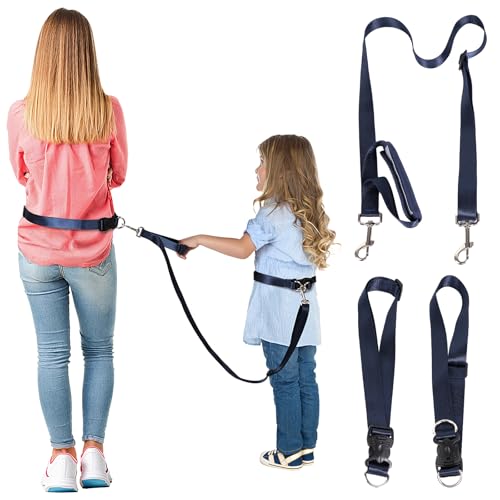
This waist-leash option provides hands-free supervision with a secure tether attached to the waist, offering versatility in use scenarios. It supports three modes: attached to both waists for hands-free security, detached and held by an adult, or grasped by the child for a sense of independence. The design prioritizes discreet, reliable supervision in crowded environments while enabling caregivers to maintain control and situational awareness during outings.
Anti Lost Wrist Strap For Autism And Special Needs

This escape-proof wrist leash features a locking buckle that requires two hands to open, helping prevent a child from removing the strap unintentionally. The adjustable mitten-like wrist attachment is skin-friendly and designed to prevent wrist irritation during extended wear. Ideal for crowded venues such as malls or airports, this option delivers a compact, portable supervision solution without a bulky harness.
Buying Guide: Key Considerations For Choosing A Safety Harness Or Leash
- Age and Size Adjustability: Look for products with scalable chest, waist, and shoulder straps, and back tethers that grow with the child to delay replacements.
- Safety Features: Prioritize reinforced stitching, secure buckles, grab handles, and a tether length that provides freedom without compromising supervision in busy areas.
- Comfort And Fit: Choose breathable fabrics, padded straps, and ergonomic designs that minimize pressure on the neck, shoulders, and back during extended wear.
- Visibility: Reflective elements or bright patterns improve visibility, especially in low-light environments or crowded public spaces.
- Functionality: Pouches or pockets can store small essentials; quick-grab handles support rapid control during transitions or crowded moments.
- Design For Independence: Options that allow varied levels of independence—from fully strapped to detachable tether—help tailor supervision to the child’s comfort and development stage.
- Maintenance: Easy-to-clean materials and durable hardware reduce wear from frequent use and outdoor activities.
- Safety In Public Spaces: Consider models with non-slip buckles and intuitive operation for caregivers, as well as patterns or badges that reduce misunderstandings from bystanders.
Overall, parents and caregivers should evaluate whether a harness, backpack-style vest, or wrist strap best matches their child’s activity level, mobility, and comfort preferences. For some families, a combination approach—such as a vest harness for outings and a lightweight wrist strap for quick trips—can offer balanced control and flexibility. Always supervise children closely in public areas and acquaint yourself with the product’s operation before use in crowded environments.